Land’s End Circuit 🇬🇧
This is a five day loop walk at the far western end of Cornwall. Over its 90 km course, it links St Ives, St Michael’s Mount, Penzance, Porthcurno (and its magnificent outdoor Minack Theatre), Land’s End and the ghostly relics of Cornwall’s historic tin-mining activities.
Most of the circuit follows the South West Coast Path (SWCP) that featured recently in the film, The Salt Path. The exception is the 19 km stretch across the peninsula from St Ives to Marazion. This pathway is known as St Michael’s Way as it led Irish and Welsh pilgrims from Cornwall’s north coast to St Michael’s Mount on the south coast.
Day 1 - St Ives to St Michael’s Mount
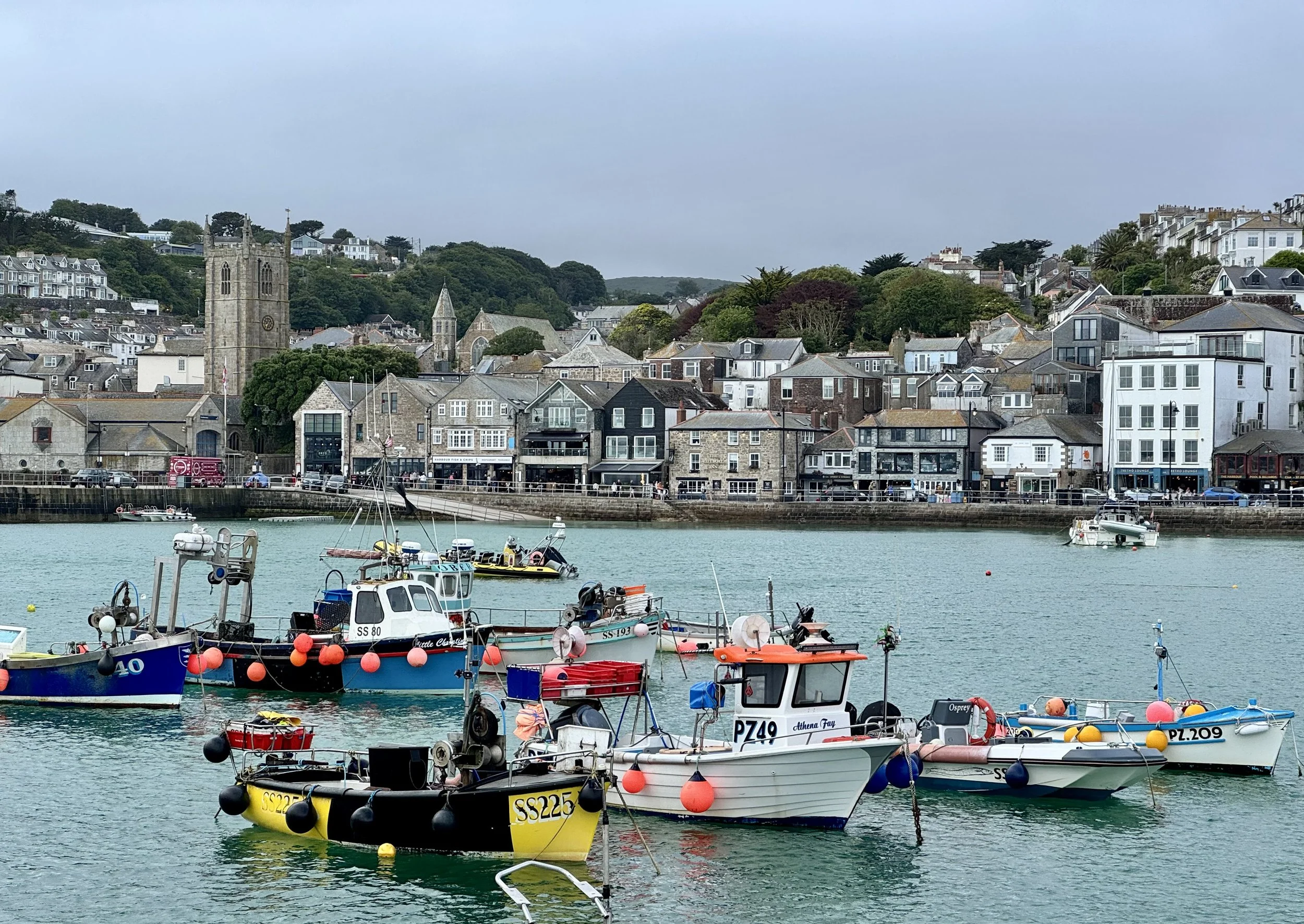
Being a loop walk, you can start anywhere, but we chose the artsy, coastal town of St Ives. With its quant harbour, good beaches and Tate Gallery outpost, St Ives draws in local and international tourists. It’s vibrant and has good public transport links.
Our route was clockwise, so the first day’s objective was to cross the peninsula to St Michael’s Mount via the ancient St Michael’s Way. Despite being mid-June, it was overcast and coolish. Porthminster and Carbis Bay beaches are idyllic-looking beaches but no-one was braving them.
St Michael’s Way climbs gently away from the coastline. For the first few kilometres sticky-beaking at the charming houses and gardens nestled into the hillside provides good entertainment.
Mid-way across the peninsula, there are various vantage points promoted as providing views of both the southern and northern coasts of Cornwall. Alas for us, the mist and drizzle (affectionately known as mizzle in these parts) had set in and we could hardly see beyond our noses.
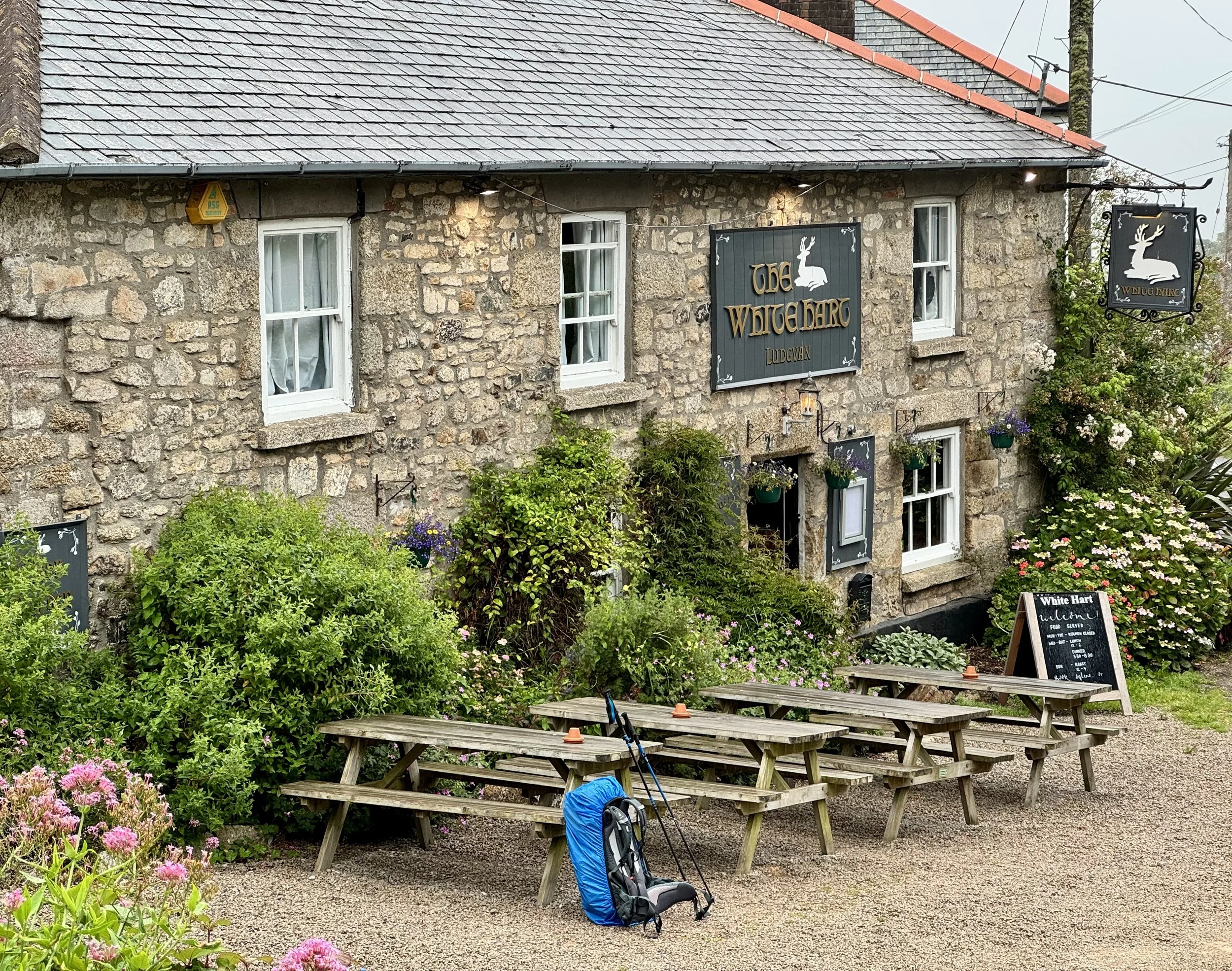
The route provides a good taste of typical English countryside walking. It includes country lanes, public footpaths and rights of way through crops and grazing lands. At Church Village of Ludgvan, the ancient White Hart is everything you want in a village pub.
Day 1 - St Michael’s Mount
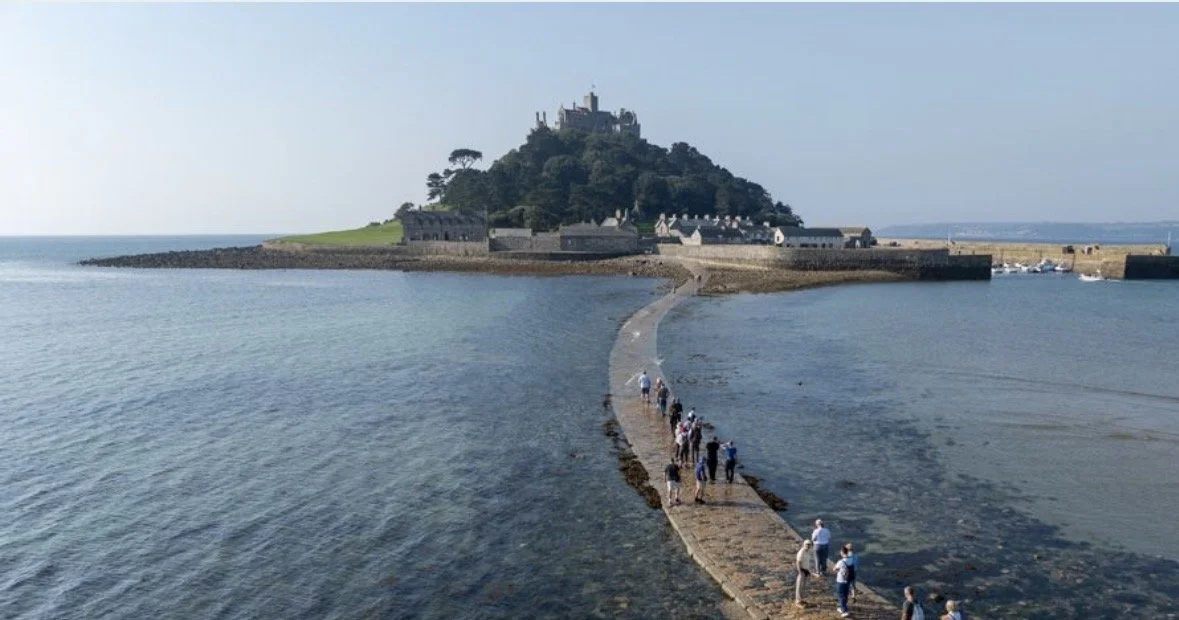
St Michael’s Way takes its name from its destination, St Michael’s Mount, an island fortress off the southern coast of Cornwall. According to local religious tradition, in the 5th century fishermen witnessed a powerful apparition of St Michael the Archangel on the rocky crags of the island. As a traditional protector of seafarers, St Michael’s Mount became the focal point of deep spiritual reverence in the region. Consequently, the island evolved into a major medieval shrine and pilgrimage site.
St Michael’s Way and St Michael’s Mount also tie in to pilgrimages to Santiago de Compostela in Spain. During the Middle Ages, pilgrims and merchants travelling from Ireland and Wales toward Santiago de Compostela in Spain sought to avoid the notoriously treacherous, ship-wrecking waters around Land's End. They chose instead to disembark on Cornwall's northern coast and to cross the narrow peninsula over to St Michael’s Mount on the south coast before resuming their voyage by sea.
If you start from St Ives earlier enough, you can reach St Michael’s Mount in time to visit the conical island, as well as the castle and chapel built on its peak.
Day 2: Mousehole to Porthcurno
From St Michaels Mount, we chose to bus straight through Penzance and on to Mousehole. Penzance has its attractions but we’d visited before and, like most travellers, our time was limited.
Mousehole is a famously picturesque, historic fishing village and a memorable overnight location. At our accomodation, our young host charms by referring to all and sundry as “m’lovely”. We set off this morning trying to recollect the lyrics from the 1969 hit “Where do you go to (My Lovely)?”.
From Mousehole, the SWCP heads west along the rugged south Cornish coastline. The path twists and turns, leaps and plunges. It’s another misty day for us and the clusters of granite tors that mark each headland look like Shakesperian castle ruins.
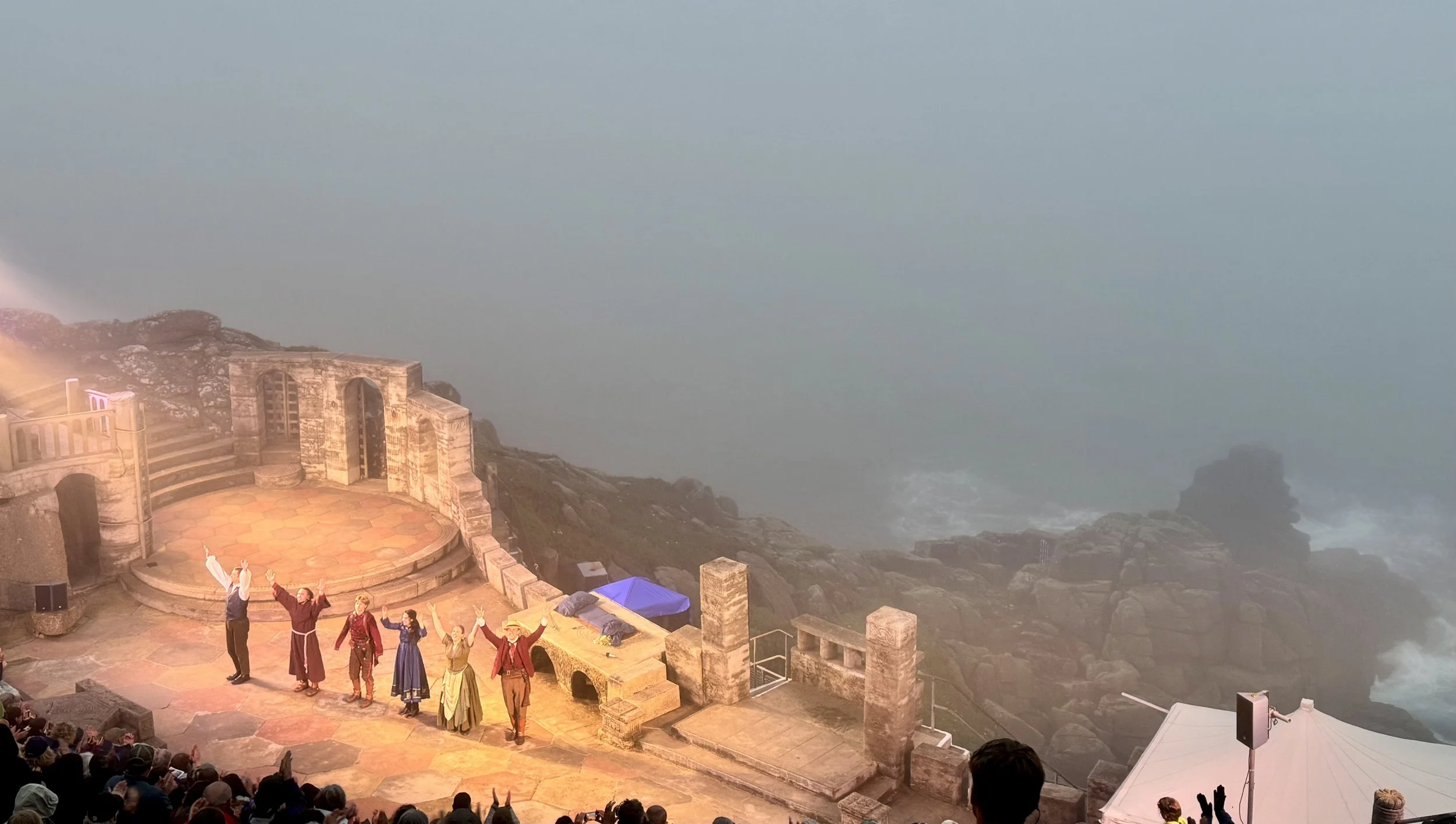
Which is appropriate because at Porthcurno the magnificent Minack Theatre sits in the open elements, hewn from the cliffs and boulders above Porthcurno beach. We’ve timed our trip to coincide with a performance of Romeo and Juliet. The mizzle is consistent though, and we doubt whether the performance will go ahead. But British actors and audiences are made of stern stuff and the show goes on.
Day 3 - Porthcurno to Sennen Cove
Further west we march and it feels more remote than ever. The wind increases and low-lying clouds swirl around us. The only vegetation now is stunted heath.
But the steadfast SWCP never shies from its mission of providing the full coastal experience. The path traces the clifftops and wends its way through the jumble of rocks strewn over each headland. Care is needed in the low visibility.
It’s quite surreal to enter the Land’s End precinct. Suddenly, we’re immersed in a tourist mecca. Souvenir shops, kiosks and amusement rides abound. The famous signpost is now fenced off and a charge applies to be photographed beside it. For the fee you get to customise the cities or messages you want on the signpost. For the SWCP walker it’s a bit jarring, but the Cornish pasties were good.
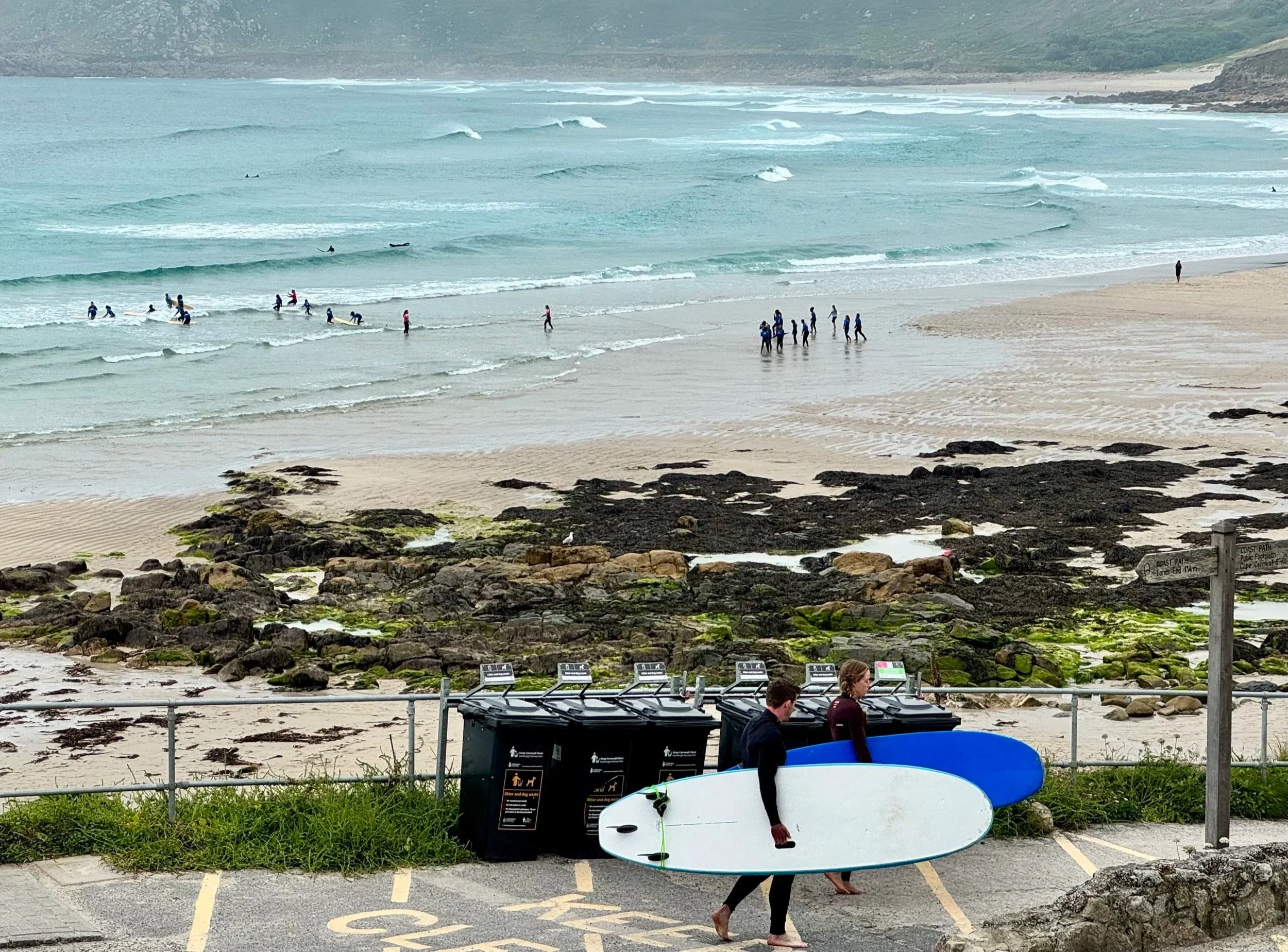
This day’s walking concludes at Sennen Cove. Here the sandy crescent beach attracts swimmers and surfers. Even with a top temperature of 17C, there are legions of wave-riders doing their thing.
Day 4 - Sennen Cove to Pendeen
A series of surf beaches provide more surfing entertainment this morning until the cliffs re-assert themselves on the approach to Cape Cornwall.
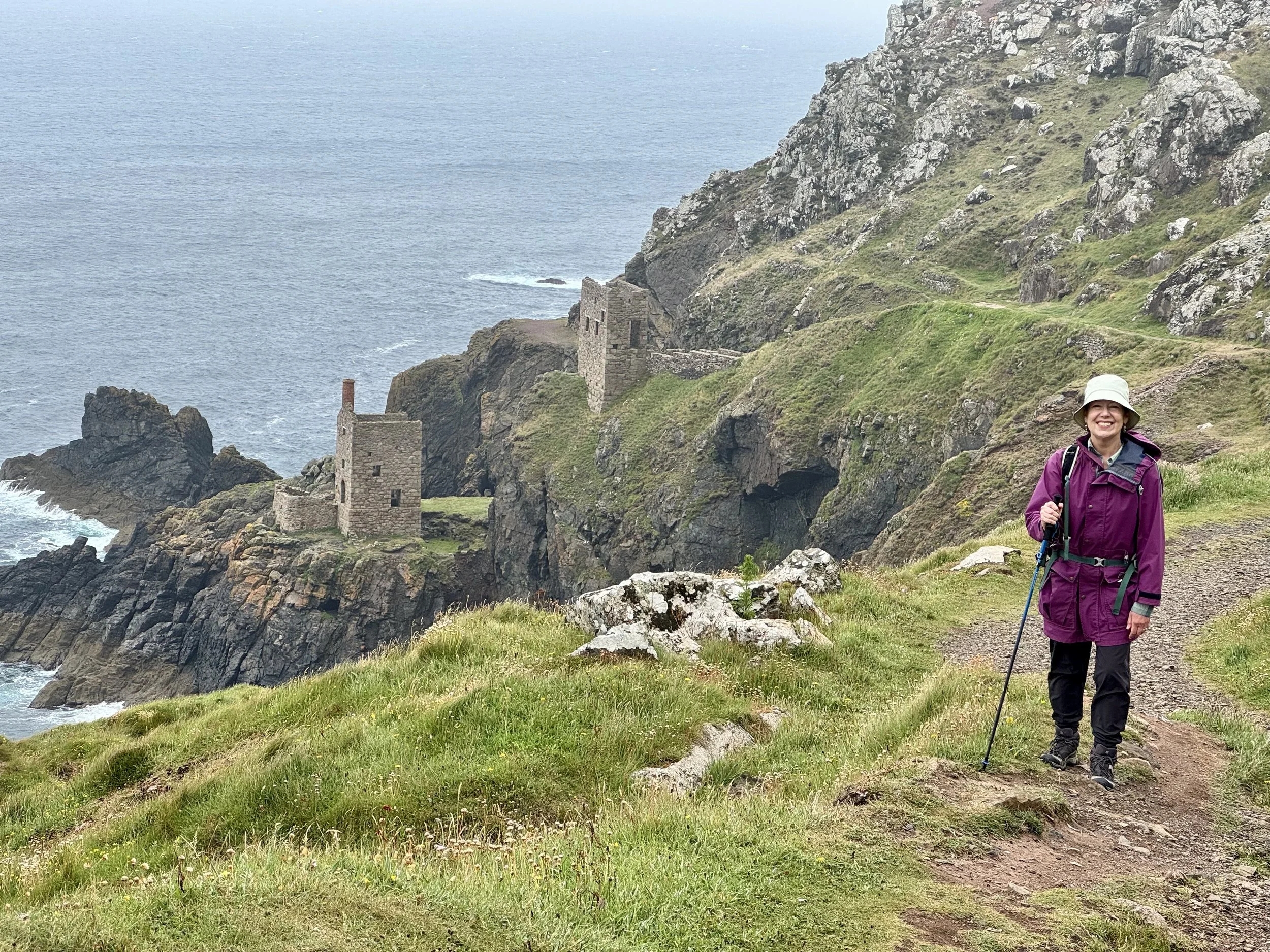
Cape Cornwall marks the beginning of the Tin Coast, a stretch of Cornish coastline that was heavily mined from the 1500’s through to the late 1800’s. Tin and copper were the main targets and in pursuit of them the intrepid pioneers tunnelled well under the seabed. The remnants of mining infrastructure allow one to picture the intense industrial activity that once took place here.
The villages slightly inland of the Tin Coast housed the miners. Pendeen and St Just are two of them and today make good overnight stops for walkers.
Day 5 - Pendeen to St Ives
Today, one way or another, we complete our loop and, hopefully, waltz back into St Ives. The question is: which route to take? If we stick on the SWCP, it’s a pretty challenging nine hour slog. The coastal ups and downs make it one of the toughest stretches of the SWCP. The main alternative is to take the slightly inland Tinners Way. This route weighs in at 6.5 hours. As we’ve been on the coast for the last three days, we opt for the Tinners Way.
The Tinners Way is more bucolic than the SWCP. The route is mainly salty, heath country in its early stages and, given the recent rain, is muddy. Gradually, farmland becomes more dominant and substantial hedgerows line the route. At this time of year, wild flowers and new growth inject life and colour into the hedges.
As our walk comes to an end, the weather gods decide to give us a reprieve. For the first time, the sun breaks through and visibility soars. Before our final descent into St Ives, we’re able to see both the north and the south coast of Cornwall. This is a consolation as we missed similar views on St Michael’s Way on Day 1.
By the time we reach St Ives it’s a balmy day. And being a Saturday, there are plenty of people at St Ives’ beaches. Our over-heated, over-worked feet lead us directly to the harbour beach where the cold water is revitalising. The many ice-cream parlours and cafes complete the task!